Wednesday, December 3, 2014

War & Peace in Lebanon

During our first few days in Jordan (the week of July 21), Brian and I had some important decisions to make.  We knew we wanted to go to Spain to complete a pilgrimage to Santiago and we knew we wanted to start around the beginning of September, but we didn't know if we wanted to go to Spain directly from Jordan or if we wanted to country-hop our way over to Spain.  We did a preliminary search on skyscanner.com for tickets from Jordan to Spain and weren't too pleased with the results (everything was either more expensive than we had hoped or the flights were terribly inconvenient) so we started to consider other possibilities.  Using the "destination: anywhere" feature, we found that the cheapest flight from Jordan was to Lebanon … and then from Lebanon we could get a cheap flight to Cyprus … and then there was one day in August when the tickets from Cyprus to Finland were $125 … and then from Finland the tickets to Spain were fairly inexpensive.  Just like that we had our plan!  And the total of all the tickets would be less than if we had flown directly from Jordan to Spain!

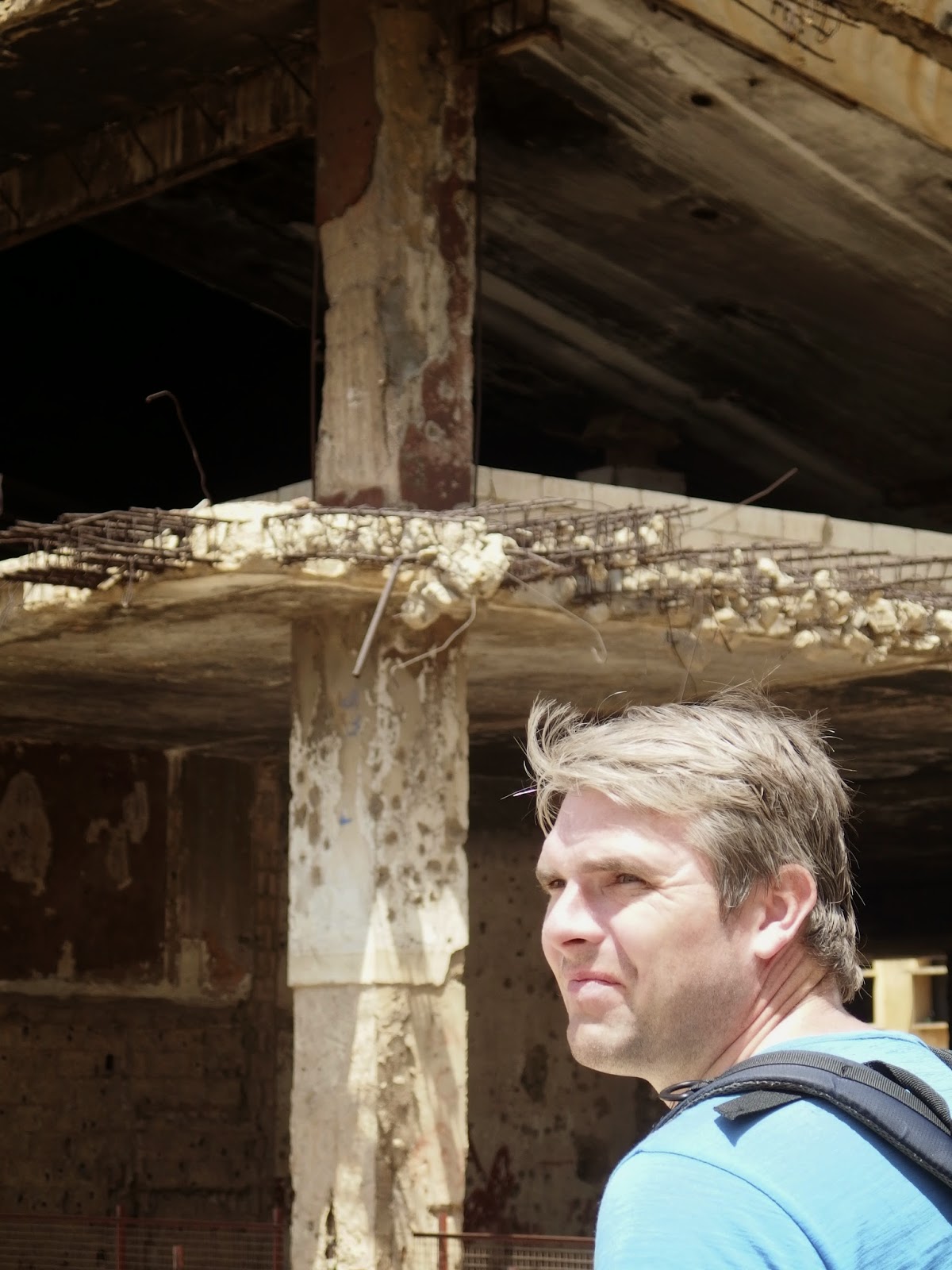
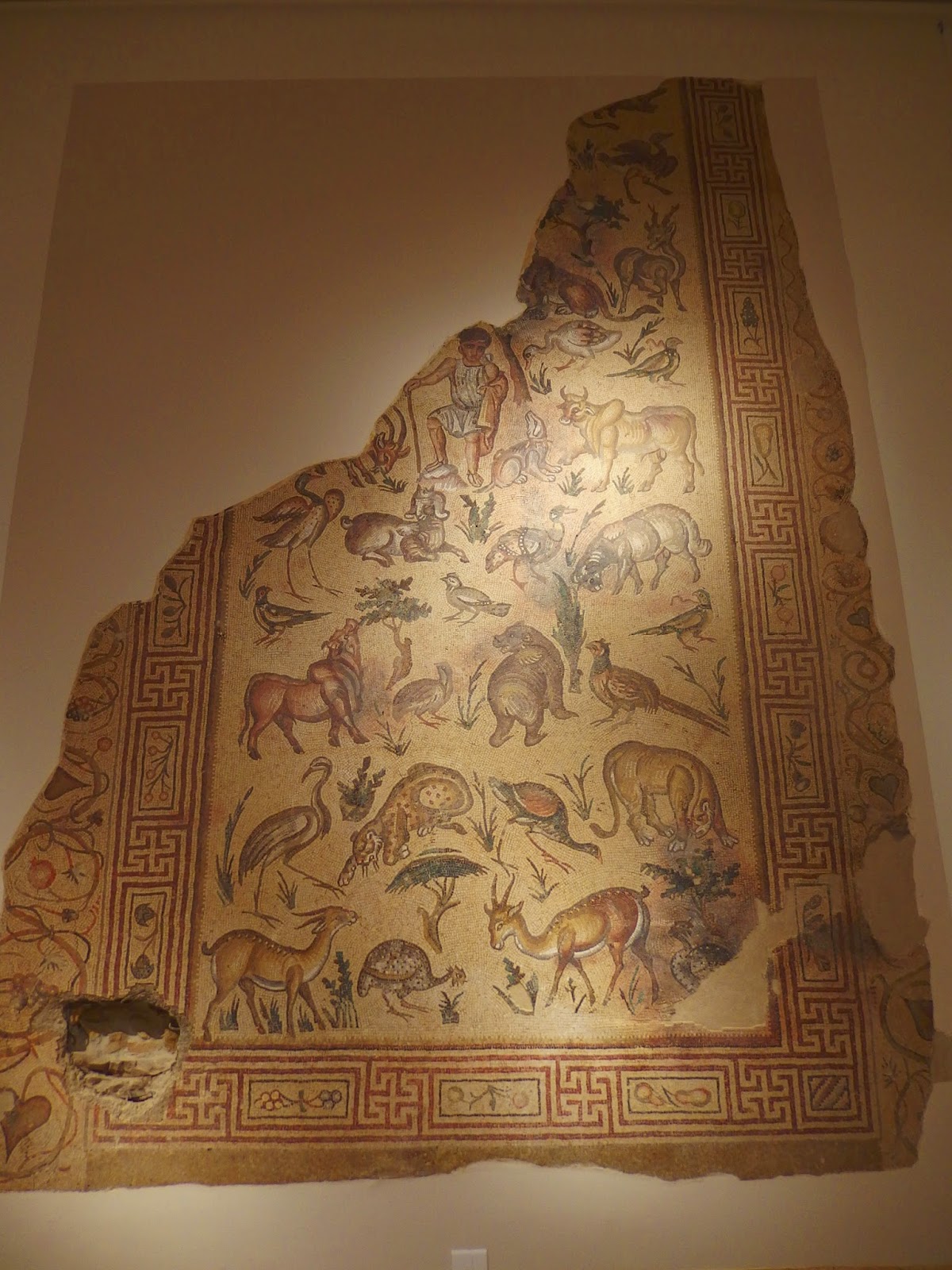
We arrived in Beirut, Lebanon on August 6, 2014.  Our excitement to see the city hailed as the Paris of the Middle East and the homeland of one of our favorite authors (Kahlil Gibran) was overshadowed by news that a few days earlier ISIS had attacked a Lebanese town close to the Syria border.  While the Lebanese military had gained control of the situation by the time we arrived, we couldn't escape signs of the times- it took us over two hours to get through immigration, the military police were actively stationed around the city, and many roads and pedestrian areas were blockaded.  But it was also remnants from Lebanon's past that kept fresh the horrors of conflict and war.  We passed by a number of buildings still riddled with bullet holes from the Lebanese Civil War (1975-1990) and the museum displayed pieces that had been damaged during fighting.  


During our three days in Beirut, I couldn't help but recall our time in other countries where we'd seen the scars of war... 

Nanjing, China where 300,000 people (half the city's population) were massacred over a period of 6 weeks during World War II.  


Laos where 600,000 tons of Vietnam-era unexploded ordinance still kill and maim people on a weekly basis. 


Ethiopia where an estimated half a million people were killed by the government during what is called the Red Terror.  


No matter where in the world or when in history or whether there is a good side and a bad side, the tragedy of war is that what takes seconds to tear apart - whether a building, a diplomatic relationship, a city, a life - is never mended as quickly, if at all.    

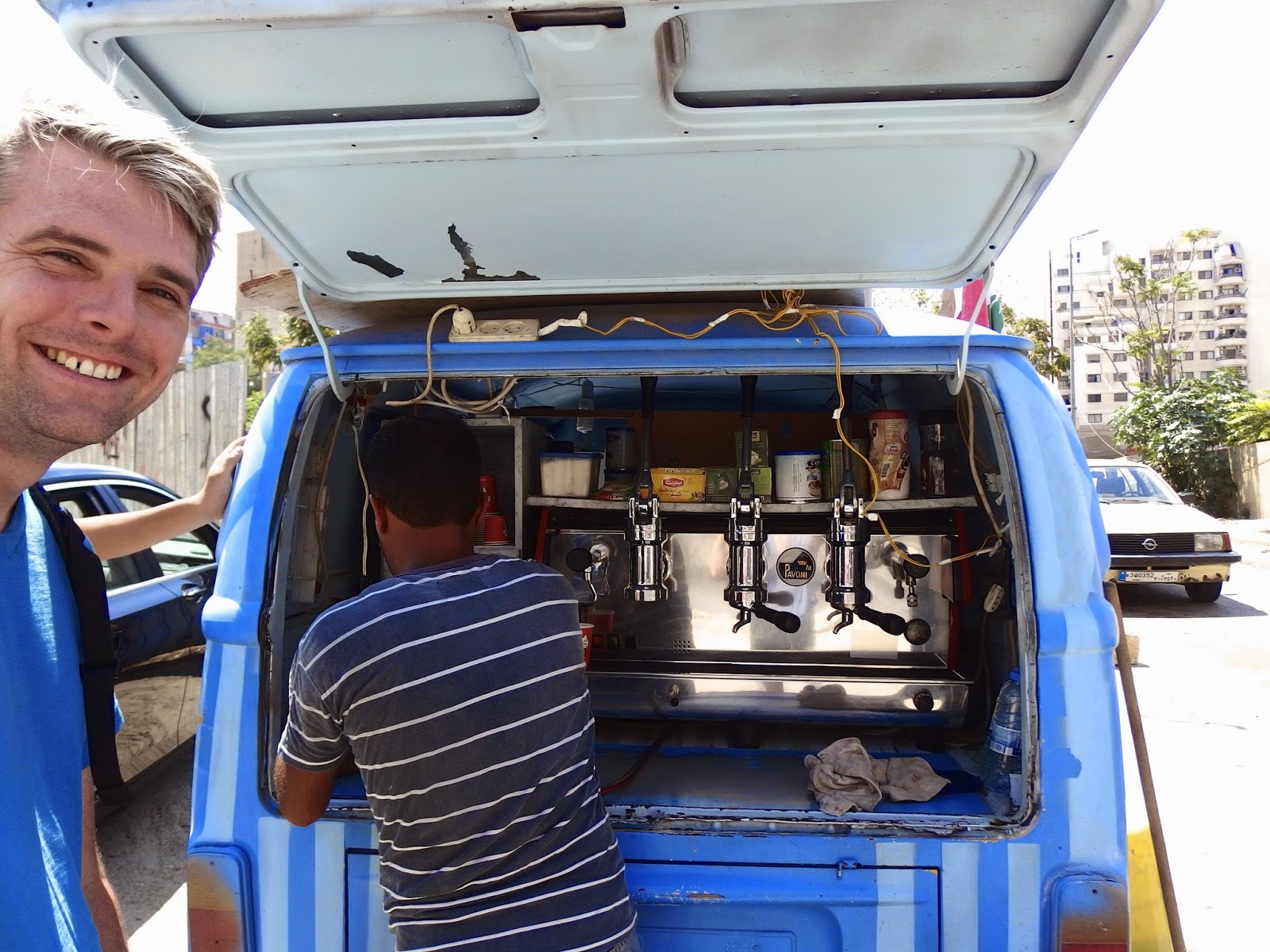
While our time in Beirut was more on the somber side, there were some really peaceful moments.  Flickers of hope, you might say.


Wednesday, November 26, 2014

Deserted in the Desert

After visiting Petra, we headed to Wadi Rum, a desert made famous by Lawrence of Arabia.  While you can trek through the wadi, considering that it was summer and Stephanie freaked Brian out when she passed out in Myanmar/Burma because of the heat, we opted to tour the desert via 4x4 and then planned on spending the night in a Bedouin camp.

The tour was fantastic - we saw camels at their watering hole (did you know there are black camels?!), ran up a sand dune, and spotted ancient Thamudic "writing" on rock walls.  

A lizard sun bathing.
A mama camel and her baby.
Exploring an oasis.
Stick camels!
Or are they horses? Maybe donkeys?!
Brian atop the sand dune.
Nothing but desert for miles and miles.
A very cool rock formation.
Atop another very cool rock formation.
Brian playing football with some kids who were
also exploring Wadi Rum. They lasted about 5 minutes
before they had to take a break from the heat.

Everything was going great … until we finished our tour and got dropped off at the camp.  Our driver said that the boss would come by in a few hours and then he left.  Our tent had been closed up and was extremely hot so we went over to the main tent where we met Kellie, Kevin, and Stephanie from California.  They were there as volunteers in exchange for room & board (a great way to see the world on the cheap!) and told us that they had been dropped off the day before and hadn't seen anyone until we showed up.  And that's when we realized that we were probably going to be on our own.  We took stock of our supplies - the California crew had some pita bread and tomatoes and we had humus, dates, water, and candy - and then we whittled away the time reading, swapping stories about our adventures, and napping.  

Our sleeping quarters.
Brian lounging in the Bedouin equivalent of a living room.

Before we knew it, 12:30 became 19:30.  Once it was cool enough to go explore, our group set out to find a good spot to watch the sunset.  Mission accomplished.
Brian scoping out things.
Kellie's vantage point.
Only thing missing was ... nothing!


As we were perched up on the rocks saying good-bye to another day, we spotted a 4x4 heading toward our camp.  Kevin & Brian scampered down from our look-out - not quite as gracefully as billy goats but pretty close - and thankfully caught up with the vehicle before it drove off, taking our dinner with it!

It wasn't the boss, but a replacement.  Although he couldn't speak much English, he spoke enough to be able to teach us a game that involved leapfrogging stones to get them all in one person's pile.  We spent the rest of the evening by the fire playing the game and star-gazing.   In one hour, we saw 13 shooting stars, more than I'd seen in my entire life!  Unfortunately, our camera isn't high-tech enough to be able to capture the night sky, so you'll just have to trust us when we say it was the most incredible night sky we've ever seen. 
Playing with sticks and stones.

The next morning the boss finally appeared to take us back to the entrance of Wadi Rum where we could catch a ride to the bus depot in Aqaba.  While we didn't learn as much about Bedouin life as we were hoping since the boss deserted us, we were thankful to have made new friends, to have witnessed a lovely sunset, and to have fallen asleep under a dazzling blanket of stars. 

The Plums & the Cali Crew - Kellie, Kevin, and Stephanie.

Saturday, November 22, 2014

The Plums & the Last Crusade


One of Jordan's most famous attractions is the world renowned ancient city of Petra and we couldn't wait to see it.  Petra literally means rock and considering the city is literally carved into the pink sandstone hills and canyons of the Wadi Musa (aka Valley of Moses), it's a fitting name.  Petra is dated to 2000 years ago and was the capital city of the Nabataeans, an Arab tribe who were in the area after the 6th century BC and whose kingdom flourished from the 2nd century BC.  Petra prospered as the center of the spice trade, but fell to the Romans in 106 AD.  It was later captured by Muslims in the 7th century and then crusaders in the 12th century.

After doing a bit of research, we learned that there were two ways we could get there - either via public transportation on the unexciting Dessert Highway or by hiring a driver & car and taking the scenic King's Highway.  Although it cost us more and took longer, we opted for the King's Highway.  It was totally worth it.  We passed through wadis (valleys that remain desert-dry except during the rainy season), by Roman ruins, and got to take a lunch break at a castle! 

One of the many beautiful vistas. 
Our driver had a little too much fun playing photographer.
He insisted that this was the perfect pose. 
It's a long way down from Karak Castle.
Probably why it was built up here. 
The black blob is volcanic sand! 
A Bedouin camp.
Brian and our driver-turned-photographer.
We made it!


When we arrived at our hostel, Gale, the manager, asked us if we were going to Petra by Night.  Intrigued, we asked what it was and she explained that the Bedouins who live in Petra light everything with candles, play some traditional music, and serve tea.  We figured it would either be really cheesy or really cool, but memorable either way so we bought our tickets and showed up at the park gates at 8:00pm.  Once it was dark enough, one of the Bedouin men came to get us and we started the long walk to the Treasury, the most well known building in Petra and the one featured in the Indiana Jones movie.  

As we followed the path of the luminarias, I lost all sense of time and space.  I didn't know how long we'd been walking and I hadn't the faintest idea what was to our left or right, behind or in front of us, above or below us.  Every now and again I'd catch a glimpse of the stars and the evening sky, but then it would disappear.  And then all of a sudden the path opened up to a yard filled with rows and rows of luminarias and we were face to face with the Treasury.  As the Bedouin men proceeded with their performances, we just stared at the dimly-lit burnt orange Treasury and tried to soak it all in.
Even the sign was lit up!
We refrained from posting a ton of pictures during Petra by
Night in case any of you ever decide to see it for yourselves
(in other words, our night shots didn't turn out too well), but
here's one of the luminarias to help fuel your imaginations.

The walk back to our hostel wasn't nearly as magical (especially because Brian was starting to feel under the weather), but when we retraced our steps two days later at 7:00am, we were in total awe of what we'd passed through the night before.

Steph playing tour guide.  Thank goodness for
being able to save webpages to reading view!
 
Heading into the Sikh!
In the Sikh!
Forty-five minutes later we caught our
first glimpse of the famed Treasury.

We spent three days discovering as much of Petra as we could and still felt as if we only scratched the surface of this legendary place.  Each trail that we followed piqued our curiosity rather than satiating it.  
In case you're wondering, you cannot walk
around inside the Treasury ... but you are able
to see inside.  Indiana Jones got it wrong.
Word on the street is that people used to think
the urn atop the Treasury held actual treasure
so they shot at it to try to break it open.
If you look closely, you can see bullet holes.
Brian walking around the "newer" part of Petra, the Roman Road.
That's a pretty bold claim...
... but probably true.  The building behind Brian is the Monastery.
The Royal Tombs are up ahead.
Atop this mountain is where Aaron, Moses' brother,
is buried. The trek there takes a couple days,
so we're saving it for next time ;-)
Here's a fuzzy close-up of the tomb.
This cat cuddled up to Steph at the High Place
of Sacrifice. Luckily for the cat,
Steph wasn't making any sacrifices that day.
Another fantastic vista in Petra.  The rocks
behind Brian are covered with caves!
The lion fountain.  One of the biggest surprises
about Petra was discovering its
extensive system of water supply channels.
 
To give some perspective, I am standing in the doorway.  
Who needs paint or wallpaper when
you've got these incredible designs?
This trail along Wadi al Mudhlim was our favorite.
The view from the roof of our hostel.  From here,
you'd never know about the treasure in the hills.